
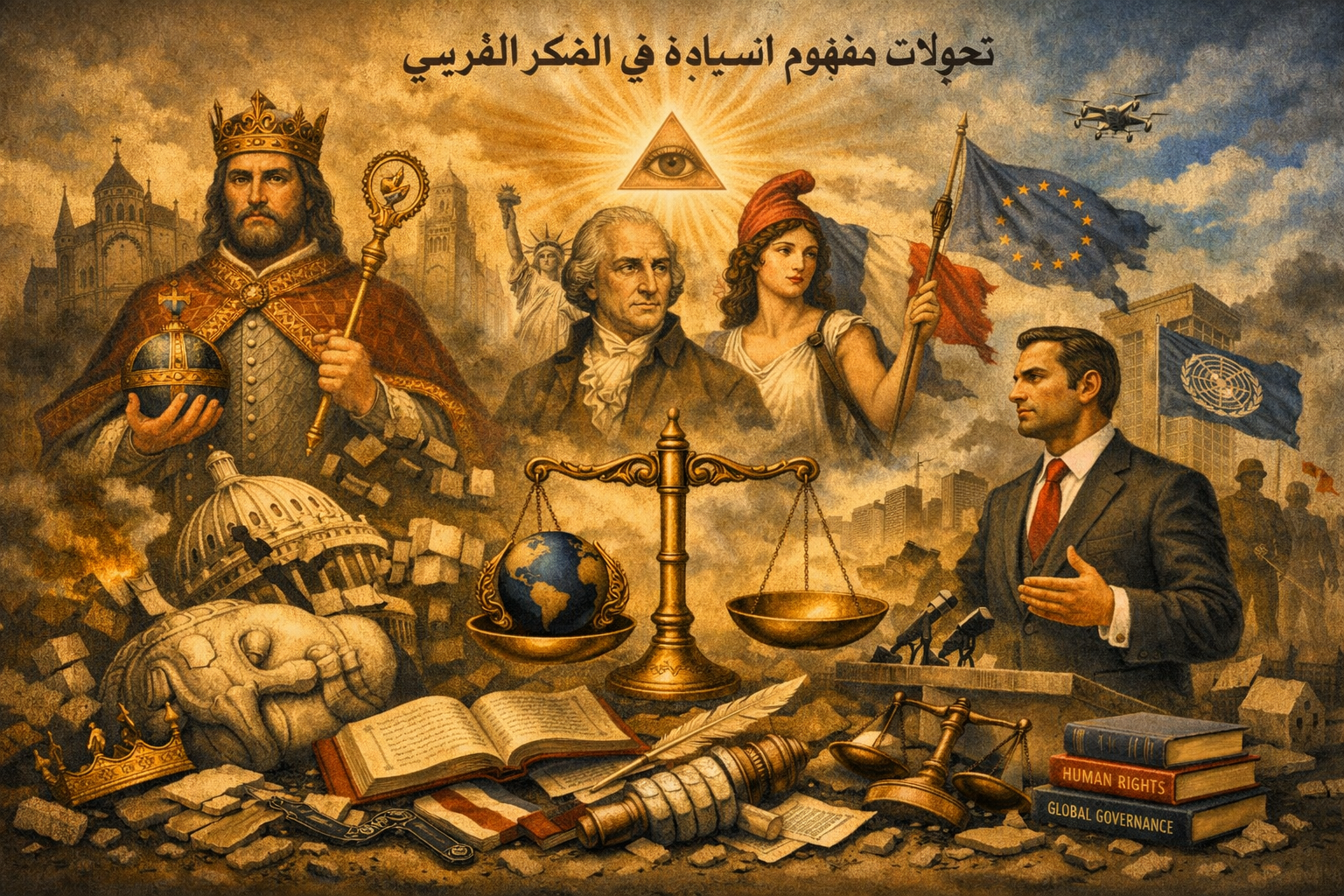
It focuses specifically on the perspective of Carl Schmitt, who redefined sovereignty as a decision manifesting in a "state of exception," thereby commenting on liberalism’s inability to confront crises. Schmitt posits that every legal order rests upon a decision that cannot be fully justified, arguing that political theology serves as a functional instrument for either legitimizing or critiquing authority, depending on the specific context. Furthermore, the study highlights the inherent tension within Schmitt’s intellectual project, specifically, the conflict between his critique of liberalism and the subsequent appropriation of his ideas to support Nazism or to review American hegemony.
The research concludes that sovereignty is a mutable concept governed by enduring structural frameworks, emphasizing the imperative to couple the necessity of decision-making with safeguards designed to prevent authoritarianism. It further notes that liberalism, despite its claims to rationality, harbors its own distinct theology, and that a comprehensive understanding of sovereignty necessitates integrating philosophical analysis with historical and political contexts in order to fully grasp the limits of law and authority in the contemporary world.
, , , , .


Comments