
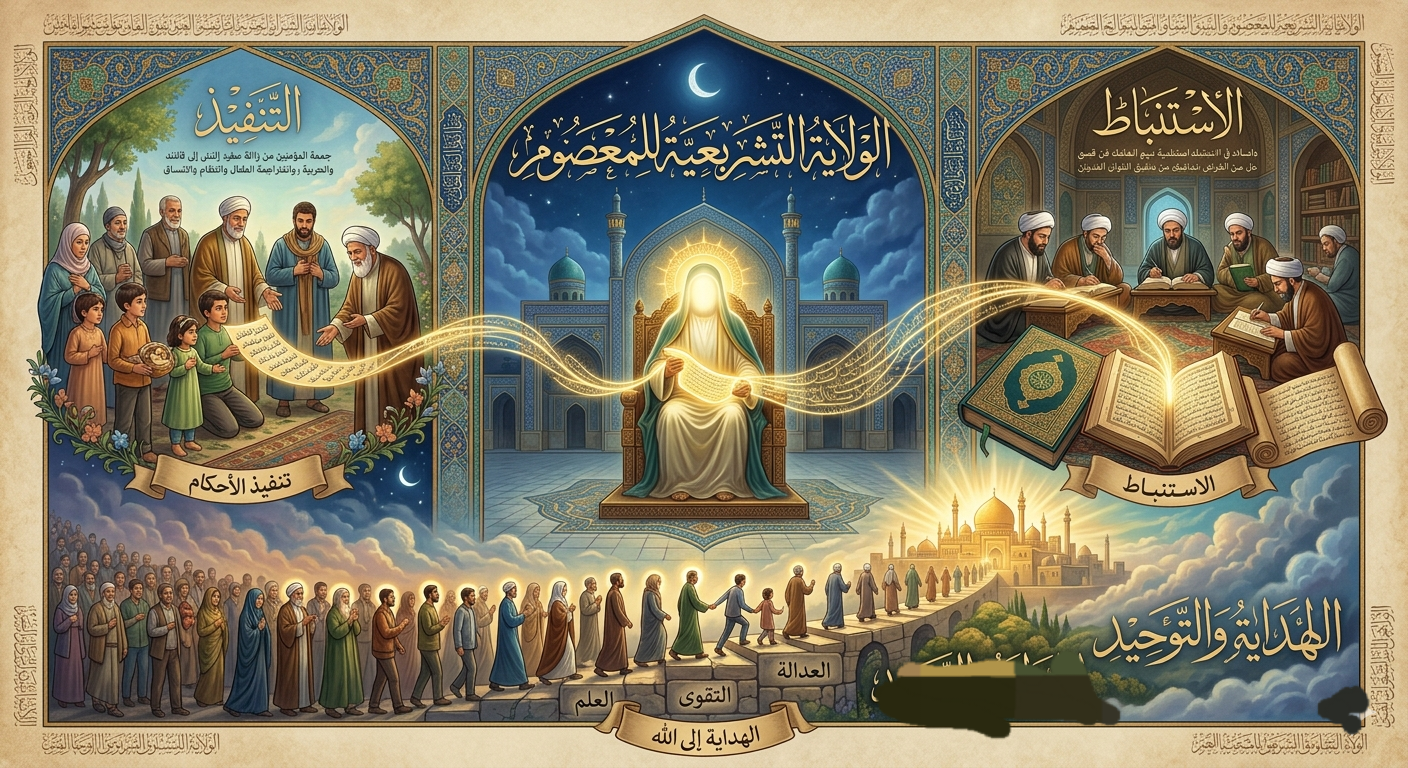
aiming to establish a rational and ethical authority that rejects the logic of coercion and domination. Allamah Tabataba'i articulated the "Theory of Conventionalities" [al-I'tibariyat], which posits that practical reason constructs concepts, such as law and sovereignty, to organize society; however, this human construct remains contingent upon Divine Sovereignty to ensure the realization of justice and to neutralize the influence of personal whims.
Based on this vision, the martyr Mortada Motahhari critiqued the Western humanist framework and liberal democracy, arguing that the separation of values from metaphysics leads to moral relativism. Conversely, Motahhari proposed a model of "responsible freedom," grounding its necessity in the principles of Shia philosophy, specifically, the doctrine of "rational goodness and badness" to establish justice as a constitutive principle, and the concept of "Middle Course between two Commands," to safeguard human freedom and responsibility, steering clear of both absolute determinism and absolute delegation. In doing so, he presented a comprehensive project for moral authority that positions Divine Sovereignty as the ultimate guarantor of human dignity, while utilizing reason, enlightened by Divine Revelation, as an effective instrument for realizing social justice.


Comments